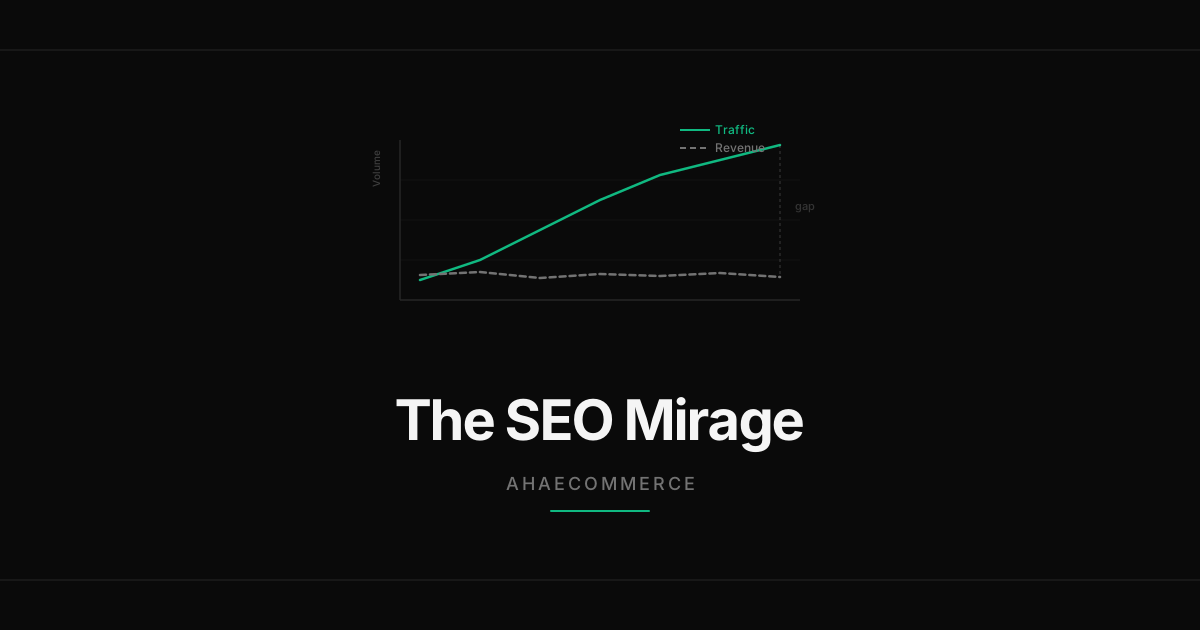
An eCommerce store ranking #1 for a keyword with 50,000 monthly searches generated $340 in revenue over 6 months from that traffic. The SEO agency that ranked them there cost $3,000/month. That's $18,000 spent to generate $340. This is not a failure of SEO. It's a failure of SEO strategy.
The keyword was informational. The searchers wanted to learn something, not buy something. They read the article, got their answer, and left. Ranking #1 for a keyword nobody buys from is like opening a store on the busiest highway in the country — except the highway has no exits.
This pattern is everywhere in eCommerce. Operators see traffic numbers climbing and assume revenue will follow. It doesn't. Traffic and revenue have a relationship, but it's mediated by intent. Get the intent wrong and volume is irrelevant.
SEO traffic is not a monolith. There are four distinct types of search traffic, and only two of them have any meaningful connection to revenue. Most SEO strategies optimize for the two that don't.
The Four Types of Search Traffic
Every search query carries an intent signal. Google's own internal documentation classifies these into four categories, and the revenue implications of each are dramatically different.
Informational Intent
Queries like "how to clean leather shoes," "what is drop shipping," or "difference between LLC and sole proprietorship." The searcher wants to learn something. They have no purchase intent. They will read your content, possibly bookmark it, and leave.
Informational keywords typically have the highest search volume. They're also the easiest to rank for because the competition is lower — established brands don't bother competing for queries that don't convert. This is exactly why most SEO agencies target them. Volume looks impressive in reports.
Navigational Intent
Queries like "Nike Air Max," "Shopify login," or "Amazon returns." The searcher already knows where they want to go. They're using Google as a URL bar. Unless you are the brand being searched for, this traffic is irrelevant to you. You cannot intercept navigational intent for another brand in any sustainable way.
Commercial Investigation
Queries like "best running shoes for flat feet," "Shopify vs WooCommerce for small business," or "top waterproof hiking boots 2026." The searcher is actively comparing options before a purchase. They have purchase intent — they just haven't decided where to spend yet. This is where organic search becomes a revenue channel.
Transactional Intent
Queries like "buy Nike Air Max 90 size 11," "order organic coffee beans free shipping," or "Allbirds Tree Runners sale." The searcher is ready to purchase now. They've already decided what they want. These keywords have the highest conversion rates and the highest competition — you're bidding against the brands themselves, major retailers, and marketplaces.
| Intent Type | Search Volume | Conversion Rate | SEO Difficulty | Revenue Impact |
|---|---|---|---|---|
| Informational | Very high | 0.1–0.5% | Low–Medium | Near zero directly |
| Navigational | Medium–High | N/A (brand-specific) | Irrelevant | Zero unless you're the brand |
| Commercial Investigation | Medium | 2–5% | Medium–High | High — comparison buyers convert |
| Transactional | Low–Medium | 5–12% | Very High | Highest per visitor, hardest to win |
The math is straightforward. A commercial investigation keyword with 2,000 monthly searches and a 3% conversion rate generates 60 sales per month. An informational keyword with 50,000 monthly searches and a 0.2% conversion rate generates 100 leads who might come back someday — but probably won't.
The SEO Investment Math That Changes Everything
Most operators evaluate SEO by one metric: organic traffic growth. This is like evaluating a retail store by foot traffic without checking whether anyone is buying. The metric that matters is cost per organic sale, and most operators have never calculated it.
The Formula
Annual SEO cost / Annual organic revenue = Cost of organic revenue
Annual SEO cost / Annual organic sales = Cost per organic sale
Here's what that looks like at different investment levels:
| Monthly SEO Spend | Annual Investment | Organic Revenue (Year 1) | Cost per $1 of Organic Revenue |
|---|---|---|---|
| $1,500 | $18,000 | $8,000–$15,000 | $1.20–$2.25 |
| $3,000 | $36,000 | $15,000–$35,000 | $1.03–$2.40 |
| $5,000 | $60,000 | $30,000–$70,000 | $0.86–$2.00 |
| $7,500 | $90,000 | $50,000–$120,000 | $0.75–$1.80 |
The 12-Month Lag Problem
SEO investment today doesn't produce revenue today. The standard timeline: months 1–3 are technical fixes and content production. Months 4–6, content begins indexing and ranking on page 2–3. Months 7–9, rankings climb to page 1 for lower-competition terms. Months 10–12, commercial-intent keywords start generating meaningful traffic.
That's 6–12 months of spending before meaningful revenue. At $3,000/month, you're $18,000–$36,000 into the investment before the first sale. This is working capital tied up with no return — capital that could have generated immediate revenue through paid acquisition.
The comparison isn't "SEO vs. paid." It's "revenue in 12 months vs. revenue today." For businesses with tight cash flow or runway pressure, this timeline alone disqualifies SEO as the primary growth channel.
When "Free" Organic Traffic Costs More Than Paid
Here's the calculation that surprises most operators. Take total SEO spend over 12 months, divide by total sales generated from organic traffic in that period.
An operator spending $3,000/month on SEO who generates 200 organic sales in year 1 has a cost per acquisition of $180. If their Google Shopping CPA is $70, organic traffic cost 2.5 times more per sale than paid — in year 1.
The counterargument is correct: organic compounds while paid doesn't. By year 3, the same SEO investment might be generating 800 sales annually with no additional spend beyond maintenance. At that point, CPA drops to $45 and organic is clearly cheaper. But you need the cash flow and patience to get there.
When SEO Is the Right Investment
SEO is not universally good or bad. It's right in specific conditions and wrong in others. The decision depends on three factors: margin structure, keyword landscape, and time horizon.
High-Margin Products With Long Payback Tolerance
If your gross margins are above 60% and your business can absorb 12 months of negative ROI, SEO investment has a strong case. The compounding returns eventually produce acquisition costs lower than any other channel. Businesses selling digital products, high-end apparel, or specialty goods fit this profile.
If your margins are 20–30% and you're cash-constrained, the 12-month payback period is a real threat to the business. Paid acquisition with immediate revenue is the safer path until the business generates enough surplus to fund organic investment.
Commercial Investigation Keywords Exist in Your Category
Not every category has a rich landscape of comparison and decision-intent keywords. Some categories are dominated by branded searches (navigational) or how-to content (informational). Before investing in SEO, run a keyword analysis filtered specifically for commercial investigation and transactional intent. If the combined volume of these keywords is below 5,000 monthly searches in your category, the ceiling for organic revenue is low regardless of how well you rank.
Category Authority as a Long-Term Moat
SEO's strongest play is building category authority — becoming the go-to resource for a specific product category. This isn't about ranking for one keyword. It's about owning 50–100 related terms that collectively capture the entire decision journey in your niche.
This takes 18–36 months of sustained investment. When it works, it creates a competitive moat that's nearly impossible for newcomers to replicate. Every new content piece reinforces existing rankings, creating a flywheel effect. But the investment period is long, and most operators abandon the strategy before the flywheel activates.
The SEO Audit Framework: Diagnosing Misaligned Traffic
If you're already investing in SEO, run this audit before your next strategy review. The goal is to categorize your existing organic traffic by intent type and measure what percentage is actually aligned with revenue.
Step 1: Export Your Top 100 Organic Keywords
Pull this from Google Search Console or your SEO tool. Sort by impressions or clicks — you want the keywords that represent the bulk of your organic visibility.
Step 2: Classify Each Keyword by Intent
Tag each keyword as informational, navigational, commercial investigation, or transactional. The classification signals are consistent:
- Informational: starts with "how," "what," "why," "guide to," "tips for"
- Navigational: contains a brand name (not yours)
- Commercial investigation: contains "best," "vs," "review," "top," "comparison," "for [use case]"
- Transactional: contains "buy," "order," "price," "discount," "coupon," "near me," "[product] + [size/color/spec]"
Step 3: Calculate the Revenue Alignment Ratio
Revenue-aligned traffic = (Commercial + Transactional clicks) / Total organic clicks
Step 4: Map Content to Conversion Path
For every piece of content ranking for a commercial or transactional keyword, verify that the page has a clear conversion path. That means: product recommendations link to product pages, comparison tables include purchase links, and the content naturally bridges to a buying decision.
Content that ranks for buying-intent keywords but lacks conversion elements is leaving money on the page. This is the lowest-effort, highest-impact fix in most SEO programs.
Step 5: Reallocate Future Content Production
Shift content production toward commercial investigation topics. The volume per keyword is lower, but the revenue per visitor is 10–50 times higher. One comparison article that ranks for "best [product] for [use case]" will outperform 20 informational articles in revenue generation.
The Strategic SEO Decision Tree
The decision about SEO investment comes down to a sequence of honest answers:
Can you afford 12 months of negative ROI? If no, prioritize paid acquisition and revisit SEO when the business generates surplus capital.
Do commercial-intent keywords exist in your category? If the keyword landscape is dominated by informational and navigational queries, SEO's revenue ceiling in your category is low. Consider whether your budget is better spent on paid channels with immediate conversion.
Are you willing to commit for 24+ months? SEO's compounding economics require sustained investment. A 6-month trial won't produce meaningful data. If you're testing SEO, commit to at least 18 months before evaluating whether it's working.
Is your current agency optimizing for the right keywords? Ask them what percentage of target keywords have commercial or transactional intent. If they can't answer, or if the answer is below 40%, the strategy is misaligned regardless of how much traffic grows.
Related Reading
- Paid Ads vs. Organic: The Real Math Nobody Shows You — The channel allocation math at every revenue stage. If your SEO audit reveals misaligned traffic, this article covers how to rebalance between paid and organic based on actual CAC and ROI numbers.
- Your Customer Acquisition Cost Is Probably Wrong — The cost-per-organic-sale calculation in this article depends on knowing your full acquisition cost. Most operators undercount by 40–60%, which makes the SEO ROI comparison even worse than it appears.